
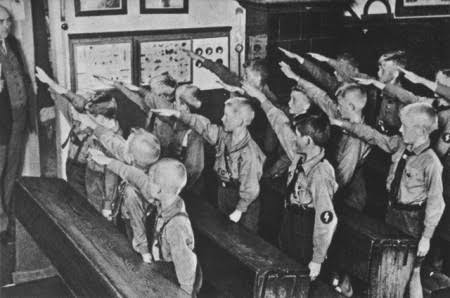
British parents were alarmed this week, as media outlets and MPs alike fell over themselves to condemn an epidemic of anti-semitism taking over British schools and colleges.
The Bell Report raises questions about antisemitism in schools. But to understand what is happening in our classrooms, we must first understand how bullying itself has changed.
Bullying is hardly a new invention. Generations of schoolchildren have experienced name-calling, intimidation, exclusion and cruelty.
What has changed is the environment in which it happens and how it is defined. What is not acceptable today, may have been a bit of banter ten years ago and perfectly fine twenty years ago. There is a popular belief that bullying is at an all-time high in schools but this is not supported by the data.
According to the Office for National Statistics, 19.1% of children aged 10–15 experienced online bullying behaviours in the year ending March 2023. Yet this was not a statistically significant increase on 2020.
Similarly, the Department for Education’s National Behaviour Survey found that reported bullying among secondary-school pupils fell from 24% in 2024 to 21% in 2025.

Education Secretary Lucy Powell MP should therefore explain why British children are being demonised once more by a Labour government that refuses to leave them alone, in their private lives and now in their education.
Whilst this does not mean bullying is disappearing, it does mean we must be careful about assuming that every increase in reported incidents reflects an equivalent increase in underlying prejudice.
And that brings us to Sir David Bell’s review of antisemitism in schools, which the Labour government is now championing.

On page 30, Bell acknowledges that anti-Jewish attitudes have been comparatively stable, while negative attitudes towards Israel have increased. The report adopts the IHRA (international Holocaust Renemberance Alliance) definition of anti-semitism. This does not include holding the Israeli government to account, debating its policies, or taking a special interest in its actions—just as one might with any other liberal democracy. That, according to the IHRA definition, is not anti-semitic. However, drawing direct equivalents between the Holocaust perpetrators and current Israeli military or political actions, would be deemed as anti-semitic according to the IHRA. Therefore it is not surprising that this report identifies a substantial increase in recorded antisemitic incidents.
These findings are not necessarily contradictory. Attitudes, reported incidents and experiences of bullying measure different things.
But they demand careful interpretation.
Are we witnessing more hatred, more willingness to report hatred, new ways of expressing it, or a combination of all three? British children have an unprecented access to the world through the internet. Social media, gaming and streaming have opened up the world in ways that previous generations wouldn’t have imagined possible. Are they to blame for the guttural reactions to what that access may show them? Before introducing nationwide educational reforms, the government should explain how it has separated these factors.
Protecting children from genuine discrimination is essential. Understanding precisely what the evidence measures is essential too and children, teachers and parents should be protected from being labelled as ‘Nazis’ when this hasn’t been done.









Leave a Reply