

At just 25, Charlie Downes has become one of the most recognisable young figures within Rupert Lowe’s Restore Britain. With a direct speaking style, a talent for political communication and an unconventional route into national politics, who is the man helping to build Britain’s newest political movement?
British politics is not generally associated with youthful energy.
For decades, Westminster has been dominated by familiar faces, carefully rehearsed answers and career politicians whose public statements often appear designed to avoid saying anything memorable.
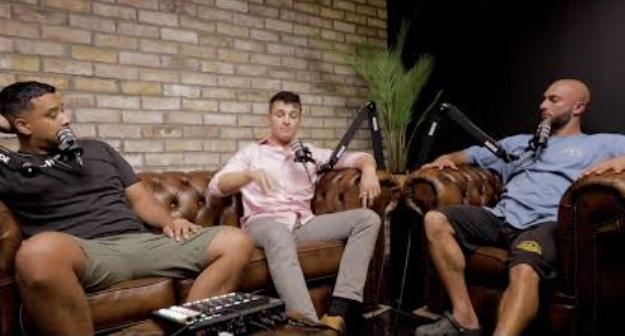
Charlie Downes offers a noticeably different style.
At just 25 years old, the co-founder, spokesperson and campaigns director of Restore Britain has established himself as a prominent voice in a political movement challenging the established parties from the right.
He is not a Member of Parliament. He has not held ministerial office. Yet his role in developing Restore Britain, alongside its leader Rupert Lowe, has brought him into national political discussions.
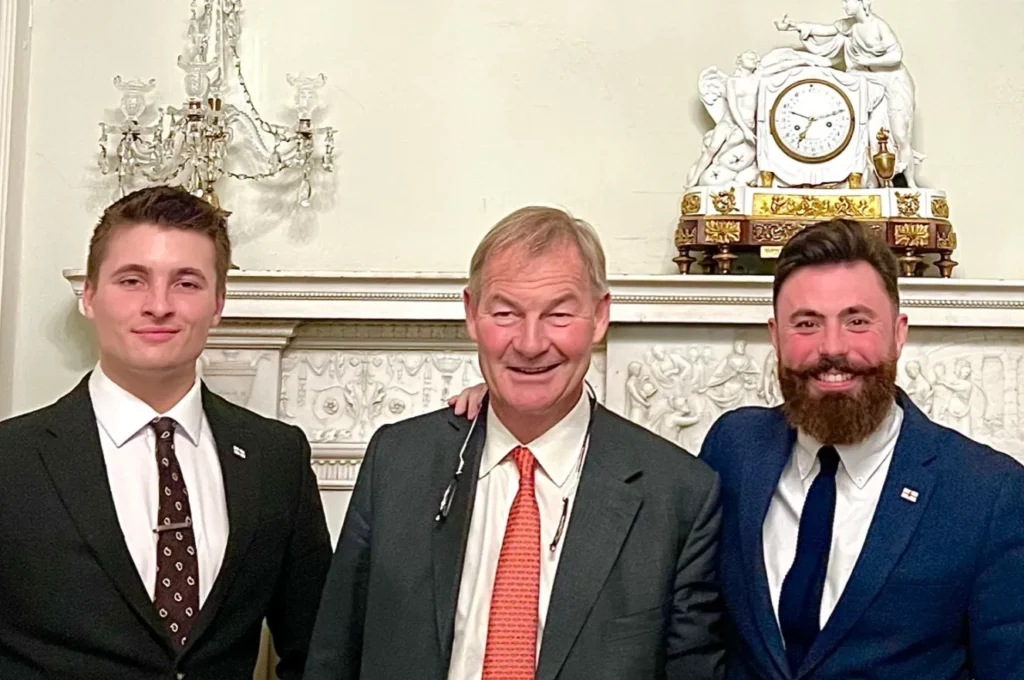
For a young man still in the early stages of his political career, it is an unusual position.
And it raises an intriguing question: who exactly is Charlie Downes?
A Different Route Into Politics
Downes belongs to a generation whose political education has taken place as much online as through traditional party organisations.
His background includes political campaigning, writing, broadcasting and involvement with Reform UK before the creation of Restore Britain.
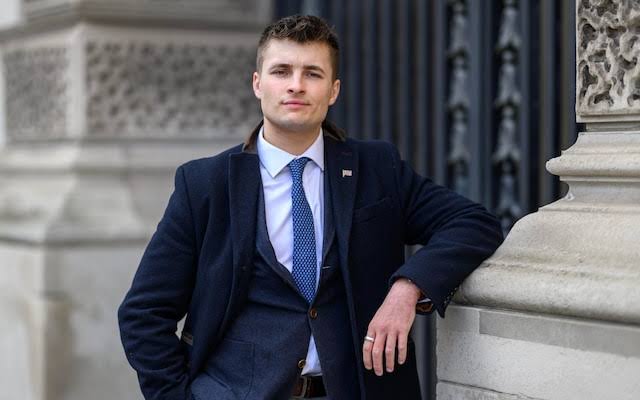
He has appeared on LBC and other political programmes, demonstrating a willingness to engage with interviewers who do not necessarily share his views.
His approach is often direct, sometimes provocative, and notably different from the carefully managed language associated with many established politicians.
One particularly revealing moment came during an LBC discussion about Brexit.
When introduced as someone who had supported leaving the European Union, Downes pointed out that he had been only 15 at the time of the referendum.
He explained that he had been more interested in playing Minecraft and Call of Duty than following politics.
It was a surprisingly candid admission.
Rather than pretending to have possessed fully formed political convictions as a teenager, Downes acknowledged how his views had developed with age.

It was also a reminder that Britain’s political arguments are now being inherited by a generation too young to have participated in some of the decisions that shaped them.
The Young Man Behind Restore Britain
Downes helped establish Restore Britain alongside Rupert Lowe in June 2025, initially as a political movement.
The organisation subsequently developed into a registered political party in February 2026.
While Lowe provides parliamentary experience and an established public profile, Downes has become closely associated with the party’s campaigning and communications.
His responsibilities include political messaging, media engagement and helping communicate the party’s ideas to potential supporters.
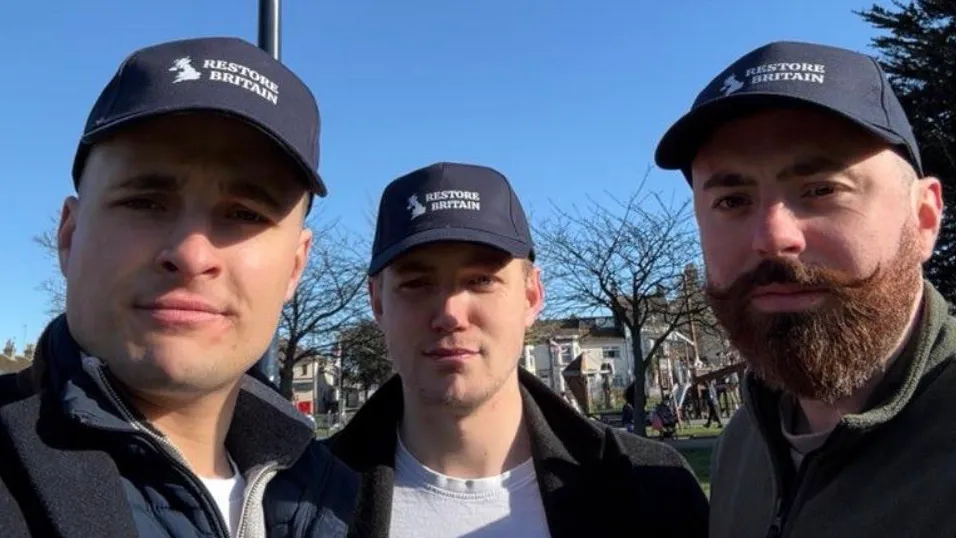
That work has attracted attention beyond Restore Britain’s existing audience.
Following the party’s 7% vote share in the Makerfield by-election, the BBC examined its social-media campaigning and interviewed Downes about the strategy behind its online presence.
The interview highlighted an increasingly important reality of modern politics: influence is no longer measured solely by parliamentary seats or television appearances.
Political organisations can build substantial audiences, develop recognisable identities and influence national conversations before establishing a significant electoral presence.
Downes is operating within that changing environment.
Speaking Without the Westminster Script
Perhaps the most distinctive feature of Downes’s public appearances is his communication style.
He tends to explain his political positions in clear, declarative language rather than relying heavily on the familiar vocabulary of Westminster interviews.
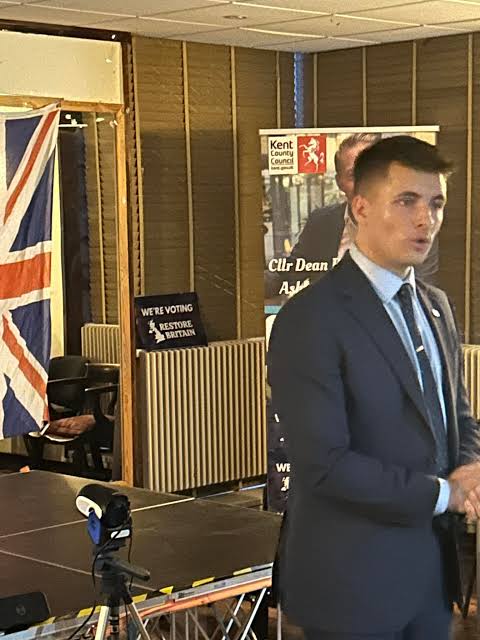
His supporters regard this as refreshing candour.
Critics dispute some of his arguments, particularly concerning immigration, national identity and the relationship between Britishness, ancestry and Christianity.
But his public statements rarely leave audiences uncertain about the broad direction of his politics.
In a recent interview at DomCon 2026, Downes described Restore Britain’s political identity as patriotic, traditionalist and explicitly supportive of Britain’s Christian heritage.
He also emphasised the importance of presenting political arguments in language accessible to ordinary people.
That emphasis on communication is significant.
Downes appears interested not simply in explaining policies but in creating a recognisable political identity around them.
Whether voters ultimately agree with his ideas is a separate question.
His approach nevertheless illustrates how a younger generation of political organisers is seeking to communicate outside traditional party structures.
Politics in the Social Media Age
Downes has entered public life at a time when political communication is undergoing rapid change.
Short videos, podcasts, independent interviews and social-media discussions increasingly compete with newspapers and television for public attention.
For emerging parties, these platforms offer opportunities that would have been difficult to imagine a generation ago.
They also bring challenges.
An online following is not the same as a constituency organisation, and attention does not necessarily translate into votes.
Restore Britain faces the task of converting public interest into the practical structures required of an electoral party.
Downes’s role in that process will be worth watching.
He has helped establish the movement’s public identity. The longer-term challenge is demonstrating whether its campaigning methods can support a durable political organisation.
More Than a Supporting Role?
It would be easy to describe Downes simply as Rupert Lowe’s young lieutenant.
But that overlooks the responsibilities he has assumed and the public profile he has developed in his own right.
His political interests extend beyond day-to-day party communications.
Through his writing, including The Future of Britain, he has explored questions of national identity, immigration and the country’s political direction.
His views are firmly situated within a nationalist and socially conservative tradition, with a particular emphasis on Britain’s historical and Christian identity.
These are contentious subjects, and his positions have attracted criticism as well as support.
But they are also questions central to the political programme he is helping to develop.
For Downes, the challenge is to move beyond making arguments that attract attention and demonstrate how those ideas would work in government.
That transition, from political communicator to practical policymaker, is one of the defining tests facing any ambitious political figure.
What Comes Next for Charlie Downes?
At 25, Downes has time to develop his political career in several directions.
He could continue concentrating on political strategy and communications, seek elected office, or develop a more independent public profile as a writer and commentator.
There is no indication that any particular route is inevitable.
What is already apparent is that his career has developed outside the traditional progression from student politics to parliamentary candidacy.
He has instead helped build a political organisation, appeared in national media discussions and contributed to debates about Britain’s future.
His emergence also raises a broader question about generational change.
As younger political activists become increasingly comfortable with digital media, established parties may find themselves competing with figures whose public identities have been built almost entirely outside Westminster.
Downes is one example of that development.
The Next Great British Politician?
Greatness in politics is difficult to define.
It requires more than confidence, media visibility or the ability to deliver a memorable argument.
Political careers are ultimately judged by decisions, achievements, public accountability and the consequences of the policies their advocates pursue.
Charlie Downes has yet to face many of those tests.
But his emergence provides an interesting example of how young people can establish a national political profile without following the conventional route into Parliament.
At just 25, he has become an important figure in a developing political party and a recognisable advocate for its ideas.
Whether his future lies in Parliament, political leadership or the strategic work behind a movement remains an open question.
For now, Charlie Downes is a young political figure whose career offers an opportunity to examine the changing nature of British political campaigning.
And at an age when many people are only beginning their professional careers, his political journey is already well underway.





Leave a Reply